
MIRECC / CoE





Rocky Mountain MIRECC for Veteran Suicide Prevention

Updated: 1 April 2019
Biography
- Sean M. Barnes PhD
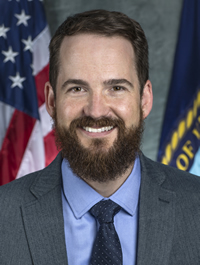 Title: Clinical/Research Psychologist
- Contact information:
720-723-6560
Sean.Barnes2@va.gov - Biography:Dr. Barnes obtained a PhD in clinical psychology from Binghamton University in 2011 following a pre-doctoral internship at the Cincinnati VA Medical Center. He then joined the Rocky Mountain MIRECC as a fellow in the VA Advanced Fellowship Program in Mental Illness Research and Treatment. Dr. Barnes completed fellowship, became licensed in the state of Colorado, and joined the Rocky Mountain MIRECC team as a full clinical research psychologist in 2013.
- Dr. Barnes contributes to the MIRECC through investigatory research (Principal Investigator and Co-PI for multiple projects), consulting (expert input for mental health and medical providers on suicide risk management), assessment, and treatment (group and individual). Additionally, Dr. Barnes is part of the training faculty and provides clinical and research supervision for post-doctoral fellows, psychology interns, and practicum students. Dr. Barnes also holds a local academic appointment as Assistant Professor at the University Of Colorado School Of Medicine, Department of Psychiatry.
- Year of Licensure: 2013
- Clinical Interest: Dr. Barnes’ primary clinical and research interest is suicide risk assessment and prevention. He is a member of the Rocky Mountain MIRECC’s suicide prevention consultation service and provides individual and group therapy (often in the context of research) including cognitive behavioral therapy for suicide prevention, acceptance and commitment therapy for depressed Veterans, problem solving therapy, and mindfulness-based therapies. He is interested in learning more about cognition and emotion during suicidal crises in order to inform assessment and treatment. He also aims to increase Veteran treatment access and engagement through work with nontraditional therapies (e.g., web-based interventions, complementary and alternative medicine, brief interventions) and improved dissemination and implementation.
- Statement about Research Program: Dr. Barnes’ research is aimed at informing suicide risk assessment and prevention among Veterans.
- Two significant barriers to suicide risk assessment are (1) reliance on patient self-report, and (2) the transient nature of suicidal thoughts and urges. One line of Dr. Barnes’ research is focused on validating objective measures of suicide risk (e.g., the death/suicide Implicit Association Test) with the hope of overcoming the limitations of patient self-report. Given the transient nature of suicidal thoughts and urges, another line of research seeks to clarify the common changes in cognition and emotion, which lead to and/or occur during suicidal crises (e.g., mood-reactive changes in beliefs about suicide). The ultimate goal of this line of research is to develop ways to assess the likelihood that suicidal thoughts and urges will resurface if a patient experiences dysphoric emotions or stressors in the near term.
- In regard to mitigating suicide risk with mental health treatment, a large proportion of people who might benefit from treatment are unable or unwilling to participate in traditional face-to-face individual therapy. Dr. Barnes’ research program also includes projects aimed at increasing the availability and uptake of empirically supported, brief and/or nontraditional therapies ranging from mind and body practices to computerized cognitive behavioral therapies.
- Available Project(s) for Fellows: Please note that some of the projects below are contingent on grant funding and/or regulatory approval. If you are primarily interested in one opportunity, please contact Dr. Barnes to learn more about the status of the project.
- 1) ACT for Life: a Brief Intervention for Maximizing Recovery After Suicidal Crises. Acceptability and feasibility trial of a brief Acceptance and Commitment Therapy intervention for Veterans hospitalized due to a suicidal crisis.
- 2) Toward Optimizing Behavioral Markers of Suicide Risk. Research examining the impact of suicide-specific dysphoric emotions on objective measures of suicide-related implicit self-associations. Designed to test the Cognitive Model of Suicidal Behavior.
- 3) Use of Web-based Computerized Cognitive Behavioral Therapies (cCBTs) to Mitigate Suicide Risk Factors. Several related projects evaluating the feasibility, effectiveness, and implementation strategies for use of cCBTs among Veterans.
- 4) Measuring Suicidal Affect. Project to develop and validate a self-report questionnaire assessing the affect participants associate with suicidal crises.
Media
Rocky Mountain Short Takes on Suicide Prevention: Implicit Association Test between Death/Life and Suicide
27 July 2016
Adam Hoffberg interviews Dr. Sean Barnes about his paper “Moving Beyond Self-Report: Implicit Associations about Death/Life Prospectively Predict Suicidal Behavior among Veterans”. The paper explores suicide risk assessment, the limitations of self-report, and why advancing our understanding of objective ways to measure suicide risk is so important. Specifically it examines the predictive validity of the death/suicide Implicit Association Test (d/sIAT) as an objective measure of future risk.
Supporting material:
- Learn more about Dr. Sean Barnes
- Learn more about the Implicit Association Test at Project Implicit (and take a test yourself)
- Learn more about the paper “Moving Beyond Self-Report: Implicit Associations about Death/Life Prospectively Predict Suicidal Behavior among Veterans” in the post below
The podcast is approximately 20 minutes long.
You can subscribe to the RM Short Takes Podcast on iTunes or your favorite podcasts tool.
Categories: Suicide Prevention
Recent Publications
Borges LM, Nazem S, Matarazzo BB, Barnes SM, Wortzel HS. Therapeutic Risk Management: Chain Analysis of Suicidal Ideation and Behavior. J Psychiatr Pract. 2019 Jan;25(1):46-53. doi: 10.1097/PRA.0000000000000358. PubMed PMID: 30633732.
Barnes SM, Monteith LL, Forster JE, Nazem S, Borges LM, Stearns-Yoder KA, Bahraini NH. Developing Predictive Models to Enhance Clinician Prediction of Suicide Attempts Among Veterans With and Without PTSD. Suicide Life Threat Behav. 2018 Sep 11. doi: 10.1111/sltb.12511. [Epub ahead of print] PubMed PMID: 30206955.
Barnes, S.M., Monteith, L.L., Forster, J.E., Nazem, S., Borges, L.M., Stearns-Yoder, K.A., & Bahraini, N.H. (2018). Developing predictive models to enhance clinician prediction of suicide attempts among veterans with and without PTSD. Suicide and Life-Threatening Behavior. https://doi.org/10.1111/sltb.12511
Erin K. Poindexter PhD, Sarra Nazem PhD, Sean M. Barnes PhD, and Trisha A. Hostetter MPH, with Phillip N. Smith PhD. Veteran Participation in Intensive Suicide Research Protocols: Evaluating Iatrogenic Effects Across Three Studies. Read more
Barnes, S. M., Bahraini, N. H., Forster, J. E., Stearns-Yoder, K. A., Hostetter, T. A., Smith, G., Nagamoto, H. T. and Nock, M. K. (2016), Moving Beyond Self-Report: Implicit Associations about Death/Life Prospectively Predict Suicidal Behavior among Veterans. Suicide and Life-Threat Behavi. doi: 10.1111/sltb.12265
Osman, A., Lamis, D.A., Bagge, C.L., Freedenthal, S., & Barnes, S.M. (in press). The Mindful Attention Awareness Scale: Further examination of dimensionality, reliability, and concurrent validity estimates. Journal of Personality Assessment.
Barnes, S.M., Russell, L.M., Hostetter, T.A., Forster, J.E., Devore, M.D., & Brenner, L.A. (2015). Characteristics of traumatic brain injuries sustained among Veterans seeking homeless services. Journal of Health Care for the Poor and Underserved, 26,92-105.
Homaifar, B.Y., Matarazzo, B.B., & Barnes, S.M. (2014). Therapeutic Assessment and Suicide Risk: Research and Clinical Applications. Therapeutic Assessment (TA) Connection.- invited
Walter, K.H., Dickstein, B.D., Barnes, S.M., & Chard, K.M. (2014). CPT v. CPT-C: Comparing effectiveness among veterans in a residential PTSD/TBI treatment program. Journal of Traumatic Stress, 27, 438-445. doi: 10.1002/jts.21934
Matarazzo, B.B., Barnes, S.M., Pease, J.L., Russell, L.M., Hanson, J.E., Soberay, K.A., & Gutierrez, P.M. (2014). Suicide risk among lesbian, gay, bisexual, and transgender military personnel and Veterans: What does the literature tell us? Suicide and Life Threatening Behavior, 44, 200-217. doi: 10.1111/sltb.12073.
Russell, L., Devore, M.D., Barnes, S.M., Forster, J.E., Hostetter, T.A., Montgomery, A.E., Casey, R.J., Kane, V., & Brenner, L.A. (2013). Challenges associated with screening for traumatic brain injury among Veterans seeking homeless services. American Journal of Public Health, 103, S211-212.
Walter, K.H., Barnes, S.M., & Chard, K.M. (2012). The influence of MDD on residential treatment outcome among Veterans with PTSD and a history of TBI. Journal of Traumatic Stress, 25, 426-432.
Barnes, S.M., Walter, K.H., & Chard, K.M. (2012). Does a history of a mild traumatic brain injury increase suicide risk in Veterans with PTSD? Rehabilitation Psychology, 57, 18-26.
Brenner, L.A., & Barnes, S.M. (2012). Facilitating treatment engagement during high-risk transition periods: A potential suicide prevention strategy. American Journal of Public Health, 102, S12-S14.
Grants/Funding
VA Centers of Innovation Subaward
Pilot Study of a Values-Based Intervention for Medication Adherence Among Depressed Veterans Hospitalized for Acute Coronary Syndrome
Co-Principal Investigator
Military Suicide Research Consortium
Behaviorally Assessing Suicide Risk
Principal Investigator
VA Office of Mental Health
Home-Based Mental Health Evaluation (HOME): A model for assisting suicidal Veterans with the transition from inpatient to outpatient settings.
Co-Investigator







 Lethal Means